
Blogs
Fascisterne: Ideology, Power, and Lasting Global Impact

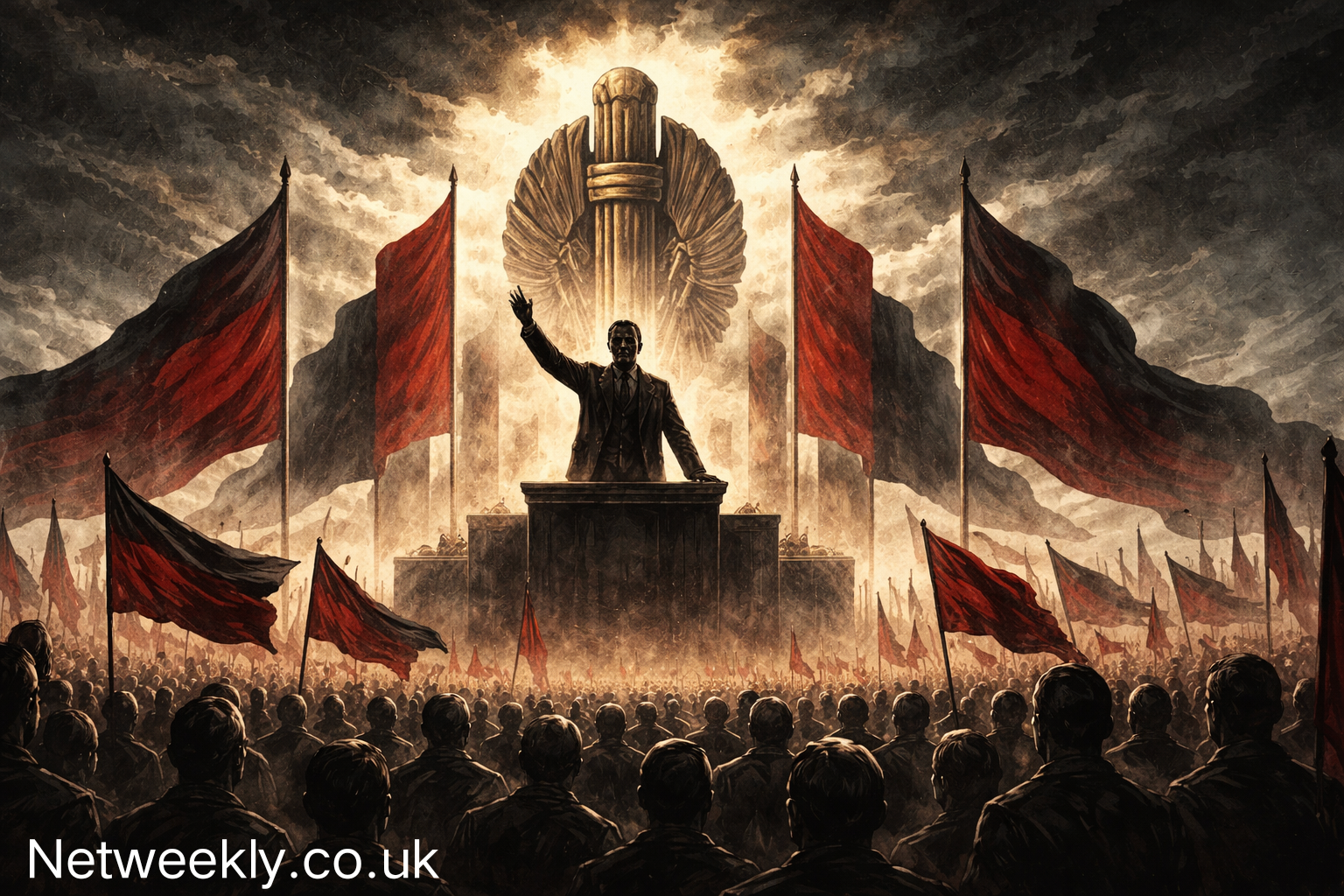
Introduction
The term fascisterne carries a heavy historical and political weight, often associated with authoritarianism, nationalism, and some of the darkest chapters of the 20th century. While the word itself originates from European languages, its meaning extends far beyond linguistic boundaries. It represents a complex ideology that reshaped nations, influenced global conflicts, and continues to echo in modern political discussions. Understanding fascisterne requires more than a surface-level definition; it demands a careful look into its origins, principles, and consequences.
The rise of fascisterne was not accidental. It emerged during times of uncertainty, economic instability, and social unrest. People searching for order and strength found themselves drawn to movements that promised unity and national revival. However, the outcomes of these movements often came at a devastating cost, both morally and historically.
What Is fascisterne
The term fascisterne refers to individuals or groups who follow or promote the ideology of Fascism. Fascism is a political system characterized by strong centralized authority, strict social control, and a focus on national identity above individual freedoms. Those identified as fascisterne typically support leadership that demands loyalty, suppresses opposition, and promotes a unified national vision.
READ MORE: döziv: Exploring a Fluid Idea Shaping Modern Thought
At its core, fascisterne ideology rejects liberal democracy and often opposes socialism, viewing both as threats to national unity. Instead, it emphasizes discipline, hierarchy, and the idea that the state is more important than individual rights. This perspective historically led to the creation of regimes that prioritized power and control over personal liberty.
Historical Origins of fascisterne
The roots of fascisterne can be traced back to early 20th-century Europe, particularly after the upheaval of World War I. Countries like Italy and Germany faced economic crises, political instability, and widespread dissatisfaction among citizens. These conditions created fertile ground for radical ideologies.
In Italy, Benito Mussolini established one of the first fascist regimes. He promoted a vision of national strength and unity that appealed to those frustrated with weak governance. Similarly, in Germany, Adolf Hitler adopted and expanded fascist ideas, leading to the rise of the Nazi regime.
The growth of fascisterne during this period was fueled by fear, propaganda, and promises of restoring national pride. However, these movements quickly evolved into oppressive systems that suppressed dissent and controlled nearly every aspect of life.
Core Principles Behind fascisterne
To understand fascisterne deeply, one must examine the principles that define this ideology. Central to fascisterne is the belief in absolute authority. Leadership is often concentrated in a single figure who is portrayed as the embodiment of the nation’s will.
Another defining feature is extreme nationalism. Fascisterne promote the idea that their nation is superior and must be protected at all costs. This belief often leads to exclusionary policies, discrimination, and even violence against those considered outsiders.
Control over information and public opinion is also essential. Fascisterne regimes historically used propaganda to shape perceptions and maintain power. Education, media, and cultural institutions were often manipulated to reinforce the ideology.
Economic control is another aspect, although it does not follow traditional capitalist or socialist models. Instead, fascisterne systems typically involve state-directed economies where private ownership exists but is heavily regulated to serve national interests.
The Role of Propaganda in fascisterne Movements
Propaganda played a crucial role in the rise and maintenance of fascisterne regimes. Leaders understood that controlling narratives could influence public behavior and loyalty. Through carefully crafted messages, they created a sense of unity and purpose while demonizing perceived enemies.
In Nazi Germany, propaganda was used extensively to promote racial ideologies and justify expansionist policies. Similarly, in Italy, Mussolini’s government used media to portray strength and success, even when reality told a different story.
The effectiveness of propaganda within fascisterne movements highlights how powerful communication can be when combined with authority and control. It also serves as a reminder of the importance of critical thinking in any society.
fascisterne and Global Conflict
The influence of fascisterne was not limited to internal politics. It played a significant role in shaping global events, particularly during World War II. The aggressive expansion policies of fascist regimes led to widespread destruction and loss of life.
Germany’s invasion of neighboring countries and Italy’s imperial ambitions contributed directly to the outbreak of war. The consequences were catastrophic, affecting millions of lives and reshaping the global political landscape.
The defeat of fascisterne regimes marked a turning point in history. It led to the establishment of new international systems aimed at preventing similar ideologies from gaining power again. However, the legacy of fascisterne continues to influence political discussions today.
Social and Cultural Impact of fascisterne
Beyond politics and war, fascisterne had a profound impact on society and culture. These regimes often sought to control artistic expression, education, and even personal beliefs. Creativity was restricted to align with state-approved narratives, and dissenting voices were silenced.
In many cases, fascisterne policies led to the persecution of minority groups. This included systematic discrimination and, in extreme cases, genocide. The cultural damage caused by these actions is still felt today, as societies continue to grapple with the consequences.
At the same time, resistance movements emerged in response to fascisterne control. These groups played a crucial role in challenging authoritarian rule and preserving democratic values. Their efforts remind us that even in the face of oppression, opposition can persist.
Modern Interpretations of fascisterne
In the modern world, the term fascisterne is often used more broadly, sometimes even as a political label or criticism. However, its historical meaning remains rooted in the specific ideology of fascism.
Today, scholars and analysts debate how elements of fascisterne may appear in contemporary politics. While modern systems differ significantly from historical fascist regimes, certain patterns such as extreme nationalism, suppression of dissent, and centralized authority continue to raise concerns.
It is important to approach the concept of fascisterne with accuracy and context. Misusing the term can dilute its meaning, while understanding it properly can help identify and prevent harmful political trends.
Misconceptions About fascisterne
One common misconception is that fascisterne ideology is simply another form of dictatorship. While it does involve authoritarian rule, it is distinct in its emphasis on nationalism, mass mobilization, and ideological control.
Another misunderstanding is that fascisterne movements were limited to Europe. In reality, similar ideologies and influences have appeared in various parts of the world, though not always in the same form.
Some people also believe that fascisterne ideas are entirely a thing of the past. However, history shows that elements of such ideologies can resurface under certain conditions, particularly during times of crisis or instability.
Why Understanding fascisterne Still Matters
Studying fascisterne is not just about learning history; it is about recognizing patterns that can shape the future. The rise of such movements demonstrates how fear, economic hardship, and political instability can influence societies.
By understanding fascisterne, individuals can better appreciate the importance of democratic values, freedom of expression, and human rights. It also highlights the need for vigilance in protecting these principles.
Education plays a crucial role in this process. When people are informed about the past, they are more likely to question authority, challenge misinformation, and make thoughtful decisions.
READ MORE: ksözcü: Meaning, Evolution and Role in Modern Communication
Conclusion
The concept of fascisterne represents more than a political ideology; it is a reminder of how power, when concentrated and unchecked, can lead to devastating consequences. From its origins in early 20th-century Europe to its lasting impact on global history, fascisterne has shaped the world in profound ways.
Understanding its principles, history, and effects allows us to reflect on the importance of balance in governance and the value of individual freedoms. While the world has changed significantly since the height of fascisterne influence, the lessons it offers remain relevant.
By examining this ideology with clarity and depth, we gain insight not only into the past but also into the challenges of the present and future.
FAQs
What does fascisterne mean?
Fascisterne refers to individuals or groups who support or follow the ideology of fascism, which emphasizes authoritarian leadership, nationalism, and strict social control.
Where did fascisterne originate?
The concept originated in early 20th-century Europe, particularly in Italy under Benito Mussolini and later in Germany under Adolf Hitler.
Is fascisterne the same as dictatorship?
Not exactly. While fascisterne systems are authoritarian, they are distinct due to their strong focus on nationalism, propaganda, and ideological control.
Why is fascisterne associated with World War II?
Fascisterne regimes in Germany and Italy played a major role in causing World War II through aggressive expansion and militarization.
Does fascisterne exist today?
While traditional fascist regimes no longer dominate, elements of fascisterne ideology can still appear in modern political movements, making it important to understand and recognize its characteristics.

Introduction
Choosing the right mattress is one of those decisions people underestimate—until they start waking up tired, sore, or restless. Sleep quality is deeply tied to the surface you rest on, and two of the most widely debated options today are memory foam and hybrid mattresses. If you’ve ever tried to make a table comparing memory foam vs hybrid mattresses, you’ll quickly realize that the differences go far beyond just comfort. They involve materials, support systems, temperature control, durability, and even how your body feels after months or years of use.
Understanding these differences is not just about picking what feels soft or firm in a showroom. It’s about matching a mattress to your sleep habits, your body type, and your long-term comfort. This article goes deep into the reality behind both types, giving you a clear, researched, and practical perspective so that when you make a table comparing memory foam vs hybrid mattresses, you’re not guessing—you’re making an informed decision.
What Is make a table comparing memory foam vs hybrid mattresses
When we say make a table comparing memory foam vs hybrid mattresses, we are essentially breaking down two different mattress technologies into clear, side-by-side insights. Memory foam mattresses are made primarily from viscoelastic foam, designed to contour to your body and relieve pressure. Hybrid mattresses, on the other hand, combine foam layers with an internal coil system, aiming to balance comfort and support.
READ MORE: ksözcü: Meaning, Evolution and Role in Modern Communication
This comparison is not just about listing features. It’s about understanding how each mattress behaves in real-world conditions. When people attempt to make a table comparing memory foam vs hybrid mattresses, they are trying to simplify a complex decision into something practical and easy to interpret. But behind that table lies a lot of science, engineering, and user experience.
Core Construction Differences
The first major distinction becomes obvious when you examine how each mattress is built. Memory foam mattresses are typically composed of multiple foam layers, including a support base and a comfort layer that molds to your body. This material was originally developed for aerospace use, which explains its ability to respond to pressure and temperature.
Hybrid mattresses, however, introduce a structural shift. Beneath the foam layers, they include individually wrapped coils. These coils provide a level of bounce and airflow that memory foam alone cannot achieve. When you make a table comparing memory foam vs hybrid mattresses, this construction difference becomes one of the most defining factors, influencing everything from durability to movement response.
Comfort and Pressure Relief
Memory foam is widely known for its ability to hug the body. It distributes weight evenly and reduces pressure points, making it especially beneficial for people with joint pain or those who sleep on their sides. The sensation is often described as sinking into the mattress rather than resting on top of it.
Hybrid mattresses offer a different experience. While they still include foam layers for cushioning, the coil system adds a supportive pushback. This means you don’t sink as deeply, and your body remains more elevated. When you make a table comparing memory foam vs hybrid mattresses, comfort is not about which is better universally—it’s about which aligns with your personal sleep preference.
Temperature Regulation and Breathability
One of the most common complaints about memory foam is heat retention. Because the material molds closely to your body, it can trap heat, making it uncomfortable for hot sleepers. Manufacturers have introduced cooling gels and open-cell structures to address this, but the issue is still noticeable in many models.
Hybrid mattresses naturally perform better in this area. The coil system allows air to circulate freely, reducing heat buildup. This makes them a preferred choice for people who tend to sleep warm. When you make a table comparing memory foam vs hybrid mattresses, temperature control often becomes a deciding factor for many buyers.
Motion Isolation and Partner Disturbance
Memory foam excels in absorbing motion. If one person moves or gets out of bed, the other person is unlikely to feel it. This makes it ideal for couples who have different sleep patterns or light sleepers who wake easily.
Hybrid mattresses, while still decent at motion isolation, cannot match the level of absorption provided by memory foam. The presence of coils introduces some movement transfer, although modern designs have improved significantly. Including this factor when you make a table comparing memory foam vs hybrid mattresses helps clarify which option suits shared sleeping arrangements better.
Edge Support and Usability
Edge support is often overlooked, but it plays a big role in how usable a mattress feels. Memory foam mattresses tend to compress at the edges, making them feel less stable when sitting or lying near the sides.
Hybrid mattresses perform better here due to the coil structure, which reinforces the edges and provides a more consistent surface across the entire mattress. When you make a table comparing memory foam vs hybrid mattresses, edge support is an important factor, especially for people who use the full surface of the bed.
Durability and Lifespan
Durability depends on material quality, but generally speaking, hybrid mattresses tend to last longer. The coil system provides structural integrity, reducing the likelihood of sagging over time.
Memory foam mattresses can degrade faster, especially if made with lower-density foam. Over time, they may develop permanent impressions. When you make a table comparing memory foam vs hybrid mattresses, lifespan becomes a key consideration, particularly for those looking for a long-term investment.
Support for Different Sleep Positions
Sleep position plays a major role in determining the right mattress. Memory foam is excellent for side sleepers because it cushions the shoulders and hips. However, stomach sleepers may find it too soft, leading to poor spinal alignment.
Hybrid mattresses offer more versatility. The combination of foam and coils provides balanced support for back, side, and stomach sleepers. This adaptability is often highlighted when people make a table comparing memory foam vs hybrid mattresses.
Cost and Value Considerations
Memory foam mattresses are generally more affordable, making them accessible to a wider range of buyers. However, price can vary depending on the quality and brand.
Hybrid mattresses tend to be more expensive due to their complex construction. The combination of materials increases production costs, but it also enhances performance. When you make a table comparing memory foam vs hybrid mattresses, cost should always be evaluated alongside durability and comfort, not in isolation.
Real-World User Experience
Beyond technical features, real-world usage reveals subtle differences. Memory foam can feel restrictive for people who move frequently during sleep, as the material responds slowly to changes in position. Hybrid mattresses, with their responsive coils, make movement easier and more natural.
Another overlooked aspect is noise. Memory foam is completely silent, while hybrids may produce slight sounds over time due to the coil system. Including these real-life factors when you make a table comparing memory foam vs hybrid mattresses provides a more complete picture.
Make a Table Comparing Memory Foam vs Hybrid Mattresses
| Feature | Memory Foam Mattress | Hybrid Mattress |
|---|---|---|
| Construction | All-foam layers | Foam + coil system |
| Comfort Feel | Deep contouring, body-hugging | Balanced, slightly bouncy |
| Pressure Relief | Excellent | Very good |
| Temperature Control | Can retain heat | Better airflow and cooling |
| Motion Isolation | Outstanding | Good |
| Edge Support | Moderate to weak | Strong |
| Durability | Moderate | High |
| Support for Positions | Best for side sleepers | Suitable for all positions |
| Price Range | Generally lower | Generally higher |
| Movement Ease | Slower response | Quick and responsive |
This table simplifies the process when you make a table comparing memory foam vs hybrid mattresses, turning complex features into a clear visual comparison.
Which One Should You Choose
The choice ultimately depends on what you value most in a mattress. If you prioritize pressure relief and minimal motion transfer, memory foam is a strong contender. If you want better airflow, stronger support, and easier movement, a hybrid mattress may be the better option.
It’s not about one being universally superior. It’s about alignment between the mattress and your personal sleep needs. That’s why taking the time to make a table comparing memory foam vs hybrid mattresses is so useful—it forces clarity in decision-making.
READ MORE: veganovies com Explained: Reality Behind the Trending Name
Conclusion
When you step back and look at the bigger picture, the debate between memory foam and hybrid mattresses is not about which one wins. It’s about understanding how each performs in real-life scenarios. By taking the time to make a table comparing memory foam vs hybrid mattresses, you gain a structured view of their strengths and weaknesses.
Memory foam offers unmatched contouring and motion isolation, making it ideal for those who want a deeply cushioned feel. Hybrid mattresses bring together comfort and support, offering better airflow and durability. The right choice depends on your body, your sleep habits, and your expectations from a mattress.
In the end, a well-informed decision leads to better sleep—and better sleep changes everything.
FAQs
1. Which mattress is better for back pain, memory foam or hybrid?
Memory foam is often better for back pain because it contours closely to the body and relieves pressure points, but hybrid mattresses can provide better spinal alignment for some people due to their support system.
2. Do hybrid mattresses last longer than memory foam?
Yes, in most cases hybrid mattresses last longer because the coil system adds durability and reduces sagging over time.
3. Is memory foam too hot for sleeping?
Traditional memory foam can retain heat, but modern versions include cooling technologies that help reduce this issue.
4. Are hybrid mattresses good for couples?
Hybrid mattresses are good for couples, but they may transfer slightly more motion than memory foam. However, many modern hybrids minimize this effect effectively.
5. Is it worth making a table comparing memory foam vs hybrid mattresses before buying?
Yes, taking the time to make a table comparing memory foam vs hybrid mattresses helps you clearly understand the differences and choose the option that best fits your needs.
Introduction
In a world where communication defines influence and perception, the idea behind ksözcü becomes highly relevant. The way messages are delivered, who delivers them, and how audiences interpret them all shape modern society. ksözcü represents more than just a word—it reflects authority, representation, and the flow of information across communities and institutions.
Understanding ksözcü helps uncover how communication works at deeper levels. Whether in journalism, politics, or public relations, the concept highlights the importance of voice and responsibility. This article explores the meaning, origins, evolution, and significance of ksözcü, showing why it remains important in today’s interconnected world.
What Is ksözcü
The term ksözcü is generally understood as a stylized version of the Turkish word “sözcü.” The root “söz” means “word” or “speech,” while the suffix “-cü” refers to a person performing a role. Together, it translates to someone who speaks on behalf of others, such as a spokesperson, communicator, or representative.
READ MORE: Stormuring: The Hidden Power Behind Chaos and Growth
The variation “ksözcü” appears to be a modern or stylized adaptation, often used for identity or branding purposes. In its simplest form, ksözcü refers to a voice that delivers messages, represents groups, and communicates ideas.
Linguistic and Cultural Roots of ksözcü
The concept of ksözcü is deeply tied to language and culture. In Turkish tradition, speech has always carried significant importance. Words are not just tools for communication; they reflect responsibility, honor, and authority.
Historically, societies relied on individuals who could speak clearly and represent others effectively. These figures acted as intermediaries between leaders and the public. Over time, this role became formalized, evolving into what we now recognize as spokespersons or representatives.
ksözcü carries this cultural weight. It is not just about speaking but about representing truth, intention, and identity.
Historical Evolution of ksözcü
The origins of ksözcü can be traced back to early social structures where communication was centralized. In traditional communities, certain individuals were trusted to deliver messages, announce decisions, and represent authority.
As societies developed, the role expanded. Governments introduced official spokespersons, and media organizations began to act as voices for the public. Eventually, ksözcü transformed from an individual role into an institutional function.
With the rise of newspapers, broadcasting, and later online platforms, ksözcü became more complex. It now includes organizations, media outlets, and even online personalities who communicate on behalf of audiences or groups.
ksözcü in Modern Society
In today’s world, ksözcü plays a central role in shaping public understanding. In journalism, reporters and media platforms act as intermediaries between events and the public. They gather information, interpret it, and present it in a way that people can understand.
In politics, ksözcü refers to official spokespersons who represent governments, parties, or institutions. They communicate policies, respond to questions, and manage public perception.
In corporate environments, ksözcü roles exist in public relations, where communication professionals represent organizations and maintain relationships with audiences.
Across all these areas, ksözcü represents the bridge between information and understanding.
ksözcü in Media and Journalism
Media organizations often function as ksözcü for society. They present information, highlight issues, and give voice to different perspectives. In this role, they carry the responsibility of accuracy and fairness.
Journalists act as communicators who interpret events and present them to the public. Their work influences how people perceive reality. Because of this, the credibility of a ksözcü becomes extremely important.
In modern media environments, this role has expanded. With online platforms and real-time updates, ksözcü must adapt to fast-paced communication while maintaining trust.
ksözcü in Politics and Public Relations
In political systems, ksözcü is essential for maintaining communication between authorities and citizens. Governments rely on spokespersons to explain policies, address concerns, and provide clarity.
Public relations professionals also act as ksözcü for organizations. They manage communication strategies, respond to crises, and ensure that messages are consistent and clear.
The role requires strong communication skills, quick thinking, and the ability to handle pressure. In many situations, ksözcü must deliver information accurately while maintaining a positive image.
Responsibilities and Challenges of ksözcü
The role of ksözcü comes with significant responsibility. Accuracy and honesty are essential, as misinformation can damage trust and credibility. A ksözcü must present information clearly while ensuring it remains truthful and balanced.
Modern ksözcü also faces several challenges. The rapid spread of information means there is little time to verify details. At the same time, misinformation can spread quickly, making it harder to maintain credibility.
Balancing different audiences is another challenge. A ksözcü often communicates with diverse groups, each with different expectations and perspectives. Managing these differences requires skill and awareness.
ksözcü and Cultural Identity
ksözcü is not only about communication but also about identity. It represents how individuals and groups express themselves and connect with others.
In many cases, ksözcü acts as a voice for communities, helping them share their perspectives with a wider audience. This role is especially important in diverse societies where representation matters.
The concept also highlights the relationship between language and identity. The way messages are delivered reflects cultural values and influences how they are received.
ksözcü in the Modern Communication Era
The modern era has transformed the role of ksözcü. Technology has made communication faster and more interactive. Audiences are no longer passive; they actively engage, respond, and challenge information.
This shift has changed expectations. A ksözcü must now be responsive, transparent, and adaptable. The ability to communicate effectively across different platforms is essential.
At the same time, trust has become more important than ever. With so much information available, people rely on credible sources to guide their understanding. ksözcü plays a key role in maintaining that trust.
The Future of ksözcü
Looking ahead, the role of ksözcü will continue to evolve. Communication will become more interconnected, and the boundaries between speaker and audience will become less defined.
Future ksözcü roles may involve advanced technologies, new communication methods, and global audiences. However, the core principles will remain the same: clarity, honesty, and responsibility.
As communication continues to shape society, ksözcü will remain a central concept, representing the importance of voice and representation.
READ MORE: döziv: Exploring a Fluid Idea Shaping Modern Thought
Conclusion
The concept of ksözcü highlights the importance of communication in modern life. From its linguistic roots to its role in media, politics, and society, ksözcü represents the power of voice and representation.
It is not just about speaking but about responsibility, trust, and connection. In a world where information shapes perception, ksözcü serves as a reminder that how we communicate matters just as much as what we communicate.
Understanding ksözcü allows us to appreciate the complexity of communication and the role it plays in shaping our world.
FAQs
1. What does ksözcü mean?
ksözcü refers to a spokesperson or representative who communicates on behalf of others.
2. Is ksözcü a formal term?
It originates from Turkish language roots but appears in a stylized form in modern contexts.
3. Where is ksözcü used?
It is used in communication, media, politics, and public relations contexts.
4. What is the main role of ksözcü?
The main role is to deliver messages, represent groups, and ensure clear communication.
5. Why is ksözcü important today?
Because effective communication and trusted voices are essential in a fast-moving information environment.
Introduction
Language does not evolve loudly. It shifts quietly, almost invisibly, until one day a new word appears and begins to carry meaning far beyond its letters. Some words are born from necessity, others from creativity, and a few emerge simply because people feel something that existing language cannot fully express. One such intriguing and increasingly discussed term is döziv.
At first encounter, döziv feels unfamiliar, almost abstract. It does not belong to traditional dictionaries or structured linguistic systems. Yet that is precisely where its power lies. It invites curiosity. It encourages interpretation. And more importantly, it reflects the way modern thinking itself has changed—less rigid, more fluid, and deeply personal.
Rather than being a fixed definition, döziv represents a living idea. It evolves through context, experience, and individual understanding. In a world where people constantly navigate complexity, ambiguity, and transformation, concepts like döziv begin to hold quiet but significant relevance.
This article explores döziv in depth—its meaning, origins, psychological relevance, cultural interpretations, and its growing role in shaping how we think, create, and communicate in today’s world.
What Is döziv
Döziv is best understood not as a traditional word but as a conceptual expression of evolving thought and interpretation. It does not have a strict or universally agreed definition. Instead, it functions as a flexible idea that adapts depending on context, perspective, and personal experience.
READ MORE: How snapjotz com Helps Content Creators and Bloggers
In essence, döziv represents a state of in-between understanding—a space where meaning is not fully formed but actively developing. It reflects moments when thoughts are emerging, when clarity is still unfolding, and when ideas are being shaped rather than finalized.
Unlike conventional terms that rely on fixed definitions, döziv thrives on openness. Its meaning is not imposed; it is discovered. This makes it particularly relevant in modern discussions where complexity often resists simple explanations.
The Origins and Linguistic Mystery of döziv
One of the most fascinating aspects of döziv is its unclear origin. It does not trace back to classical languages, nor does it appear in established linguistic roots. This absence of history gives it a unique kind of freedom.
The structure of the word itself feels intentional. The presence of the “ö” suggests a European linguistic influence, while the rest of the word remains simple and memorable. This combination creates a sense of familiarity and novelty at the same time.
Many emerging terms in modern culture are not born from formal systems but from creative expression, niche communities, or experimental language use. Döziv fits this pattern. It likely emerged as a way to capture a feeling or idea that traditional vocabulary could not adequately express.
Because it lacks a rigid origin, döziv is not confined by history. Instead, it evolves with usage. Each person who engages with it contributes to its meaning, making it a collaborative linguistic phenomenon.
Understanding döziv as a Concept
To truly understand döziv, one must move beyond the expectation of clear definitions. It is not meant to be boxed into a single meaning. Instead, it operates as a conceptual framework for thinking about uncertainty, creativity, and transformation.
Döziv often appears in moments when clarity has not yet arrived. It represents the phase between confusion and understanding, where ideas are still forming and possibilities remain open.
This makes it particularly relevant in creative processes. Writers, artists, and thinkers often experience periods where ideas are not fully articulated but are deeply felt. That state—where something meaningful is emerging but not yet defined—is closely aligned with the essence of döziv.
It also reflects how modern individuals process information. In an age of constant input and shifting perspectives, people rarely experience complete certainty. Instead, they navigate layers of partial understanding, continuously refining their thoughts. Döziv captures this dynamic process.
döziv in Modern Thought and Society
Modern life is marked by rapid change, complexity, and constant reinterpretation. Traditional frameworks often struggle to keep up with the pace at which ideas evolve. In this context, döziv becomes increasingly relevant.
It aligns with a way of thinking that values exploration over conclusion. Rather than seeking immediate answers, individuals today are more open to ongoing questioning and evolving perspectives.
Döziv also reflects a shift in how knowledge is perceived. Instead of viewing knowledge as fixed and complete, it is now often seen as something fluid and continuously developing. This perspective resonates strongly with the essence of döziv.
In discussions around identity, culture, and innovation, the concept provides a subtle but powerful lens. It allows people to embrace uncertainty without feeling lost, recognizing that not all understanding needs to be immediate or absolute.
The Psychological Dimension of döziv
From a psychological perspective, döziv connects deeply with how the human mind processes ambiguity. The brain does not always operate in clear, structured patterns. Thoughts often emerge gradually, shaped by experience, emotion, and reflection.
Döziv represents this internal process. It acknowledges that meaningful insights often come from uncertain or transitional mental states rather than immediate clarity.
This concept can also reduce the pressure to have everything figured out. In a world that often demands quick answers, döziv offers a different perspective. It suggests that uncertainty is not a weakness but a natural part of thinking and growth.
By embracing döziv, individuals can become more comfortable with incomplete understanding. This, in turn, can lead to deeper reflection, more creative thinking, and a greater openness to new ideas.
Cultural Interpretations of döziv
As with many emerging concepts, döziv does not carry a single universal meaning. Its interpretation can vary across cultural contexts.
In some perspectives, it may be seen as a symbol of creativity—a space where new ideas are born. In others, it may represent introspection or philosophical depth, reflecting the human tendency to question and explore.
The flexibility of döziv allows it to adapt to different cultural narratives. It can fit into discussions about art, philosophy, psychology, or even everyday life.
This adaptability is one of its strongest qualities. It ensures that the concept remains relevant across different environments, rather than being limited to a single field or interpretation.
döziv and Creativity
Creativity rarely follows a straight path. It involves experimentation, uncertainty, and moments where ideas feel incomplete. Döziv exists precisely in this space.
It represents the stage where inspiration begins but has not yet taken form. This is often the most important phase of creative work, as it allows for exploration without limitation.
By embracing döziv, creators can move beyond the fear of imperfection. They can focus on the process rather than the outcome, allowing ideas to develop naturally.
This perspective can lead to more authentic and innovative work. Instead of forcing clarity too soon, döziv encourages patience and openness, which are essential for true creativity.
döziv in Personal Growth and Transformation
Personal growth is not a linear journey. It involves periods of confusion, reflection, and gradual change. Döziv captures this transitional phase.
There are moments in life when individuals feel caught between who they were and who they are becoming. This can be uncomfortable, but it is also where transformation happens.
Döziv represents this space of becoming. It acknowledges that growth often occurs in uncertainty, not certainty.
By understanding this concept, individuals can approach personal development with greater patience. They can accept that not all answers come immediately and that progress often happens quietly, beneath the surface.
Challenges in Defining döziv
The very nature of döziv makes it difficult to define. Its strength lies in its flexibility, but this also creates challenges.
Some people may struggle to understand it because it does not offer clear boundaries. Others may interpret it differently, leading to varied meanings.
However, this lack of definition is not a flaw. It is what allows döziv to remain relevant in a constantly changing world.
Rather than limiting it with strict definitions, it is more useful to view döziv as an evolving concept—one that grows with usage and interpretation.
The Future of döziv
As language continues to evolve, concepts like döziv are likely to become more common. People are increasingly seeking ways to express complex, nuanced ideas that traditional vocabulary cannot fully capture.
Döziv has the potential to grow into a widely recognized term, particularly in discussions related to creativity, psychology, and modern thinking.
Its future will depend on how people continue to use and interpret it. If it resonates with enough individuals, it may move from an obscure concept to a meaningful part of contemporary language.
READ MORE: Nerwey Meaning and Modern Uses in Identity Evolution
Conclusion
Döziv is not just a word—it is a reflection of how modern thinking has changed. It represents uncertainty, creativity, transformation, and the evolving nature of understanding.
In a world that often demands clarity and certainty, döziv offers a different perspective. It reminds us that not all meaning needs to be immediate or fixed. Some ideas are meant to grow, to shift, and to develop over time.
By embracing döziv, individuals can become more comfortable with ambiguity. They can explore ideas more freely, think more deeply, and approach life with greater openness.
Ultimately, döziv is not something to define once and for all. It is something to experience, interpret, and allow to evolve.
FAQs
What does döziv actually mean
Döziv does not have a fixed definition. It represents a fluid concept related to evolving thoughts, uncertainty, and emerging understanding.
Is döziv a real word or just a concept
It is more of a conceptual term than a traditional word, often used to describe abstract thinking and transitional ideas.
How is döziv used in everyday life
It can describe moments of uncertainty, creative thinking, or personal growth where clarity is still developing.
Why is döziv important in modern thinking
Because it reflects how people today process complex ideas—openly, flexibly, and without rigid definitions.
Can döziv become widely recognized in the future
Yes, as language evolves and people seek new ways to express nuanced ideas, döziv may gain broader acceptance.